Water System Vulnerabilities: Why Tap Water Isn't Guaranteed
No electricity means no water—municipal systems depend on electric pumps. Flint, Jackson MS, and the Texas freeze affected millions. 2.1 trillion gallons lost annually to aging pipe breaks. Water storage is non-negotiable.

**No electricity means no water, even if the pipes are fine.** Municipal water systems depend on electric pumps. The Texas freeze, Flint crisis, and Jackson MS failure affected millions. Your tap water isn't guaranteed, and 2.1 trillion gallons are lost annually to aging pipe breaks.
Water System Vulnerabilities: Why Tap Water Isn't Guaranteed
Estimated read time: 9 minutes | Difficulty: Beginner | Total cost: $20-75
This article discusses potential emergency scenarios based on historical events and expert analysis. The goal is to help you prepare realistically, not to cause alarm.
Key Takeaways:
- No electricity = no water - Municipal systems depend on electric pumps
- 2.1 trillion gallons of treated water lost annually due to aging pipe breaks
- Flint, Jackson MS, Texas freeze: Millions affected by system failures in recent years
- You can survive 3 days maximum without water, storage is non-negotiable
Turn on your tap and water flows. It's so reliable, so consistent, so seemingly permanent that most people never question it. Municipal water systems are invisible infrastructure, we notice them only when they fail.
And they fail more often than you might think. Flint, Michigan. Jackson, Mississippi. The 2021 Texas freeze. These aren't isolated incidents or rare disasters. They're symptoms of a larger reality: municipal water systems are vulnerable, aging, and dependent on infrastructure that can fail in multiple ways.
Understanding how water systems actually work, what makes them vulnerable, and what happens when they fail is essential for realistic emergency preparation. Water is life. When the tap runs dry, you have days at most before the situation becomes critical. The time to prepare is now, while water still flows.
How Municipal Water Systems Actually Work
Most people's mental model of water systems is simple: water comes from somewhere (a river, lake, or aquifer), gets cleaned at a treatment plant, and flows through pipes to homes. This model is correct in broad strokes but misses the complexity and vulnerability of the actual system.
Water Sources
Surface water from rivers, lakes, and reservoirs:
- Requires extensive treatment to remove contaminants, pathogens, and sediment
Groundwater from wells and aquifers:
- Typically cleaner but can still contain minerals, chemicals, and biological contaminants
Combination systems:
- Many systems use multiple sources for reliability
Treatment Facilities
Multiple processes make water safe:
- Coagulation and flocculation to remove particles
- Sedimentation to settle out solids
- Filtration through sand or other media
- Disinfection with chlorine or other chemicals
Each step requires equipment, chemicals, and most critically, electricity.
Pumping Stations
Water doesn't flow uphill on its own. Every time water must be lifted, from a well, from a treatment plant to a storage tank, from low-lying areas to higher elevations, pumps do the work.
These pumps run on electricity. No power means no pumping.
Distribution Systems
Pipes of various sizes, from large transmission mains to small service lines connecting individual homes. These pipes range in age from brand new to over a century old. Older pipes are more prone to breaks, leaks, and contamination.
Storage Tanks
Provide pressure and reserve capacity:
- Water towers and elevated tanks use gravity to maintain pressure
- Ground-level tanks require pumps to maintain pressure
- Storage capacity typically provides only a few hours to a few days of supply without additional pumping
Pressure Maintenance
Water systems must maintain positive pressure at all times to prevent contamination. When pressure drops, contaminants can enter the system through leaks or breaks.
This is why boil-water advisories are issued when pressure is lost, even if the water was clean before, it may be contaminated after pressure loss.
Power Dependency: The Achilles Heel
The single greatest vulnerability of modern water systems is their complete dependence on electricity. This dependency exists at every level of the system.
Treatment Plants
Require electricity for:
- Pumps
- Mixers
- Chemical feeders
- Control systems
- Monitoring equipment
Without power, treatment stops. Some facilities have backup generators, but these depend on fuel supplies and regular maintenance. Generator failures are common during extended outages.
Pumping Stations
Require continuous power throughout the distribution system. When power fails:
- Pumps stop
- Water pressure begins dropping immediately
- Elevated storage tanks provide water for a few hours using gravity
- Once tanks are empty, water stops flowing
Control Systems
Monitor water quality, pressure, and flow. Depend on electricity and often on internet connectivity. When these systems fail:
- Operators lose visibility into the system's status
- Can't respond quickly to problems
The 2021 Texas Freeze Example
Catastrophic Failure: When power failed across Texas, water systems failed simultaneously. Pumps stopped. Water in pipes froze and burst. Treatment plants went offline. Millions of people lost water service not because the water source disappeared but because the system couldn't function without electricity.
Even areas that maintained power experienced water failures because the system is interconnected. A power failure in one area can affect water pressure in adjacent areas. A treatment plant failure affects everyone downstream.
The system is only as strong as its weakest link.
Infrastructure Age and Decay: The Slow-Motion Crisis
While power dependency creates acute vulnerabilities, infrastructure age creates chronic ones. Much of America's water infrastructure was built in the early to mid-20th century and is now reaching or exceeding its design life.
The Scale of the Problem
The American Water Works Association estimates that much of the drinking water infrastructure in the United States is approaching the end of its useful life within the next 30 years. Some pipes still in service date to the 1800s.
Pipe Failures
The American Society of Civil Engineers' Infrastructure Report Card consistently gives drinking water infrastructure poor grades.
Shocking Statistic: Each year, approximately 2.1 trillion gallons of treated water are lost in the United States due to pipe breaks and leaks, enough water to supply the nation for six months.
Lead Contamination
Aging pipes created the Flint water crisis and affects thousands of other communities. When water chemistry changes or pipes corrode, lead leaches into drinking water. The problem is widespread but often undetected until health impacts become apparent.
Maintenance Backlogs
Replacing aging pipes is expensive, and many municipalities defer maintenance due to budget constraints. This creates a vicious cycle:
- Deferred maintenance leads to more failures
- Failures require emergency repairs
- Emergency repairs cost more than planned replacement would have
Climate Stress
More frequent extreme weather events, floods, droughts, freezes, stress systems that were designed for historical climate patterns. Infrastructure that was adequate for the 20th century may be inadequate for the 21st.
Recent Failures: Case Studies in System Vulnerability
Recent water system failures provide concrete examples of how and why systems fail, and what happens to communities when they do.
Flint, Michigan (2014-2019)
Became synonymous with water system failure. The crisis began when the city switched its water source to save money, without adequately treating the new source.
What happened:
- Corrosive water leached lead from aging pipes into drinking water
- Thousands of residents poisoned, particularly children
- Crisis revealed how quickly a water system can go from safe to dangerous
- Took years to restore trust and safety once contamination occurred
Jackson, Mississippi (2022)
Complete water system failure when flooding damaged the main water treatment plant where pumps were already failing due to years of deferred maintenance.
Impact:
- City of 150,000 people left without safe drinking water
- Crisis wasn't a sudden disaster but the culmination of decades of infrastructure neglect
- Even after emergency repairs, system remained fragile and prone to failure
Texas Freeze (2021)
Millions of people across the state affected:
- Water systems failed due to power outages, frozen pipes, and equipment failures
- Boil-water advisories affected major cities for days or weeks
- Some areas went without running water for over a week
- Demonstrated how quickly modern water systems can fail when infrastructure faces conditions outside its design parameters
Boil-Water Advisories
Occur thousands of times per year across the United States, affecting millions of people. These advisories are issued when:
- Water pressure drops
- Contamination is detected
- System integrity is compromised
Each advisory represents a system failure, even if temporary.
What Happens When the Tap Runs Dry
When municipal water systems fail, the impacts cascade rapidly through every aspect of daily life.
Drinking Water (Most Immediate)
Humans can survive only a few days without water. When taps run dry:
- Stored water becomes precious
- Bottled water sells out immediately
- Alternative sources like rivers or pools become necessary despite contamination risks
Sanitation (Fails Almost Immediately)
- Toilets don't flush without water
- Showers and baths become impossible
- Hand washing, critical for preventing disease, becomes difficult or impossible
- Trash accumulates because people can't clean containers
- Poor sanitation + crowded conditions = disease risks
Food Preparation
- Cooking many foods requires water
- Washing dishes and food preparation surfaces requires water
- Without clean water, foodborne illness risks increase
- People resort to disposable plates and utensils, creating more trash
Firefighting Capability
Fire hydrants depend on water pressure. Without pressure:
- Firefighters can't fight fires effectively
- A single fire can spread unchecked, threatening entire neighborhoods
Medical Care
Hospitals and clinics require water for:
- Sanitation
- Sterilization
- Patient care
When municipal water fails, medical facilities must rely on stored water or emergency supplies, which are limited.
Business Operations
Most water-dependent businesses can't operate:
- Restaurants
- Laundries
- Car washes
Economic impacts extend beyond the immediate crisis.
Social Order
As the crisis extends:
- People become desperate for water
- Conflicts over limited supplies increase
- Distribution points become chaotic
- The veneer of civilization is thinner than most people realize
Your Water Security Action Plan
Immediate Actions (Do Today)
1. Calculate your household's actual water needs
The standard recommendation is one gallon per person per day, but this covers only drinking and minimal hygiene.
Realistic needs are higher:
- Drinking
- Cooking
- Sanitation
- Hygiene
- Cleaning
Plan for at least 2 gallons per person per day, more if you have special needs or live in a hot climate.
2. Assess your current water storage
How much water do you have stored right now? Most people have none.
Your water heater contains 30-50 gallons, but do you know how to access it if municipal water fails? Do you have containers for storing additional water?
This Week
1. Begin building water storage using food-grade containers
Start with a minimum of 3 days per person (6 gallons per person), then expand toward two weeks (28 gallons per person).
Water is heavy and takes up space, but it's non-negotiable for survival.
2. Acquire water purification methods
Choose methods appropriate for your likely sources:
If you have access to surface water (rivers, lakes, ponds):
- Need filtration AND disinfection
If you're limited to potentially contaminated municipal water:
- Need disinfection methods
Have multiple methods:
- Boiling requires fuel
- Chemical treatment requires chemicals
- Filtration requires filters
Redundancy is critical.
This Month
1. Identify alternative water sources in your area
- Where is the nearest surface water?
- Are there pools, ponds, or water features in your neighborhood?
In a true emergency, these sources become critical despite contamination concerns. Knowing where they are and how to access them provides options.
2. Test your water purification methods with actual practice
Don't wait for an emergency to learn that:
- Your water filter is clogged
- Your purification tablets are expired
- You don't have enough fuel to boil water
Practice builds competence and reveals gaps in your preparation.
3. Learn to use water efficiently
Practice:
- Washing dishes with minimal water
- Sponge bath techniques
- How to flush toilets with minimal water
These skills extend your water supply and reduce the stress of water scarcity.
The Bottom Line: Water Storage Is Non-Negotiable
Municipal water systems are more vulnerable than most people realize. They depend completely on electricity, operate on aging infrastructure, and can fail in multiple ways. When they fail, the impacts are immediate and severe.
You cannot survive without water. Unlike food, where you can go weeks with minimal intake, water is measured in days. Three days without water is the outside limit for most people. In hot conditions or with physical exertion, the timeline is shorter.
This makes water storage and purification the single most important aspect of emergency preparation. You can improvise shelter, you can stretch food supplies, you can manage without electricity. But you cannot improvise water. You must have it stored, or you must have reliable means to purify it from available sources.
The Good News
Water storage and purification are relatively simple and inexpensive:
- Containers are cheap or free
- Purification methods range from free (boiling) to inexpensive (bleach, filters)
- Main barriers are space and the psychological hurdle of believing it's necessary
The next water system failure is not a question of if, but when and where. Your water storage and purification capability determines whether you weather that failure safely or become another statistic in the next crisis.
What's Next?
This is the fourth article in our Reality Check series. Next, we'll examine economic collapse indicators and what actually happens when currencies fail, spoiler: it's not Mad Max.
Related Articles:
- 5 Ways to Purify Water with Items Under $5
- DIY Water Storage: Free and Nearly-Free Container Solutions
- Emergency Water from Your Hot Water Heater: Step-by-Step Guide
Sources & Further Reading
[1] Jackson, Mississippi water crisis - Wikipedia. https://en.wikipedia.org/wiki/Jackson,_Mississippi_water_crisis
[2] Flint Water Crisis: Everything You Need to Know - NRDC. https://www.nrdc.org/stories/flint-water-crisis-everything-you-need-know
[3] Potential Public Health Impacts of Deteriorating Distribution Systems - PMC. https://pmc.ncbi.nlm.nih.gov/articles/PMC7147732/
[4] America's aging water infrastructure faces new threats - Construction Dive. https://www.constructiondive.com/news/water-infrastructure-funding-climate-pfas/743992/
No comments yet. Be the first to share your thoughts!
Related Articles

Grocery stores carry 3 days of inventory. During COVID-19, panic buying reduced that to less than 1 day. If trucks stopped running, stores would be empty within 4-5 days. Understanding just-in-time inventory is essential for realistic food storage planning.

FEMA's own goal is 2-4 days response time, not 72 hours. Hurricane Katrina took days. Hurricane Maria left 3.7 million without power for nearly a year. Understanding real government response timelines is critical for adequate preparation.
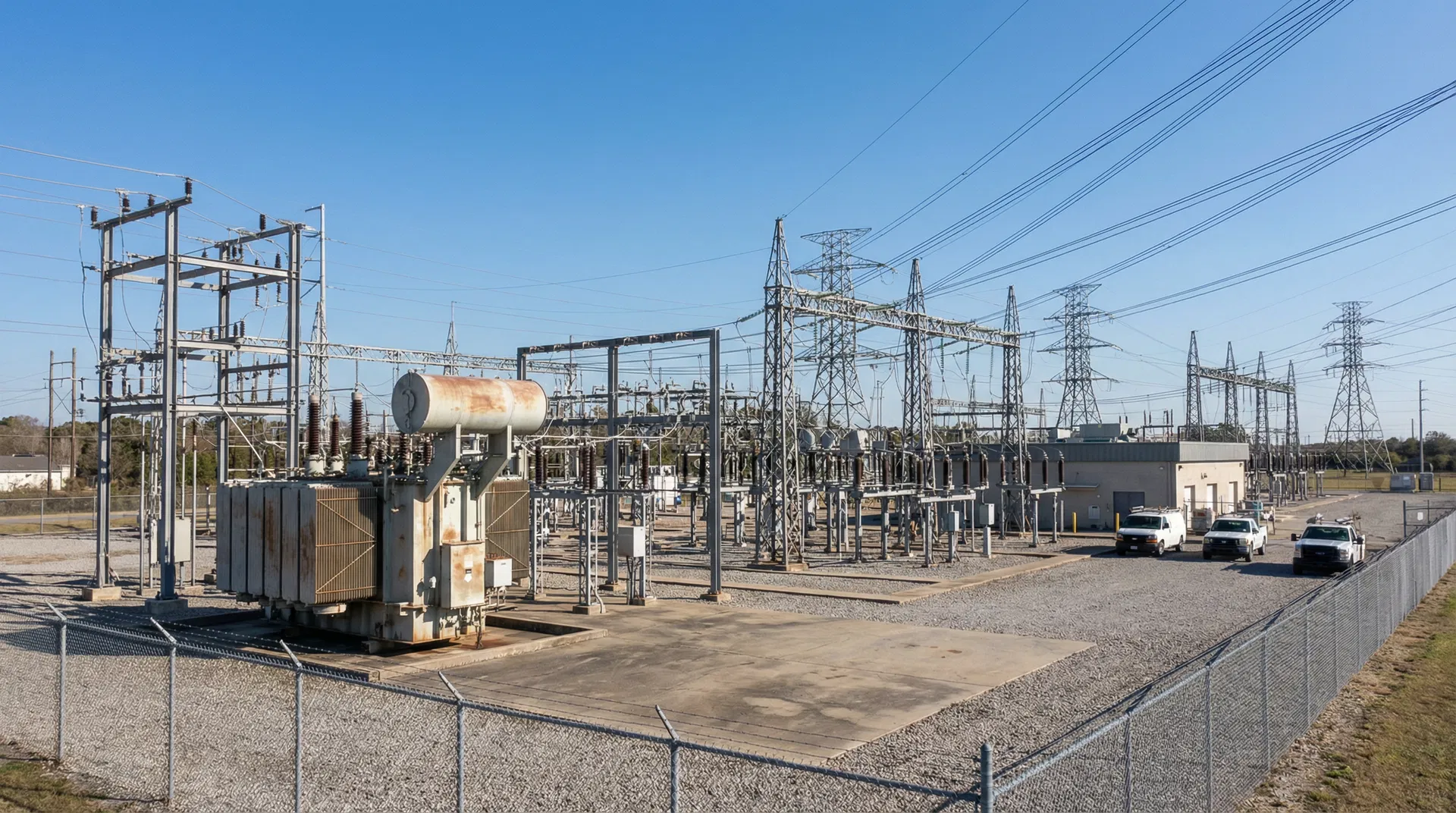
Texas was 4 minutes from a grid collapse that would have taken weeks to restore. The 2003 blackout left NYC without power for 2 days. When the grid fails, the official "72-hour" advice becomes dangerously inadequate.