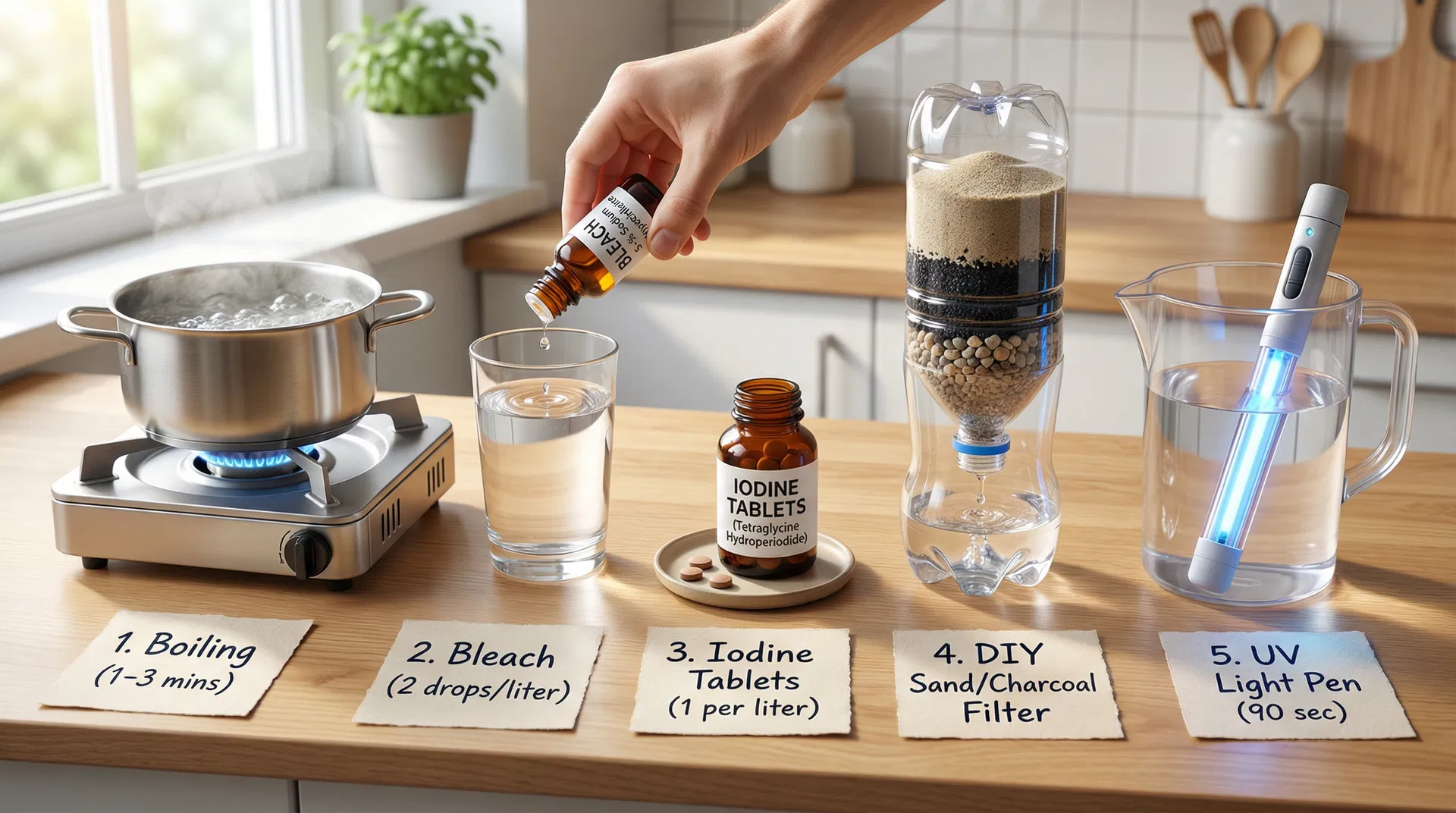
5 Ways to Purify Water with Items Under $5
Estimated read time: 7 minutes | Difficulty: Beginner | Total cost: $0-5
---
The water stopped flowing from your tap this morning. Whether it's a broken pipe, contaminated supply, or natural disaster, you're suddenly facing a reality millions deal with daily: access to clean, safe drinking water isn't guaranteed. But here's what most people don't realize, you probably already have everything you need to purify water sitting in your kitchen right now.
After researching and implementing dozens of water purification methods, I've discovered that the most effective emergency water treatment often costs less than a cup of coffee. In this guide, I'll show you five proven water purification techniques using common household items that cost under $5 each, because clean water shouldn't be a luxury.
---
Why Water Purification Matters
The sobering reality: Contaminated water kills more people worldwide than war, terrorism, and weapons of mass destruction combined. Even in developed countries, water emergencies happen regularly, from broken mains to natural disasters to contamination events.
Common water contaminants include: - Bacteria (E. coli, Salmonella, Cholera) - Viruses (Hepatitis A, Norovirus, Rotavirus) - Parasites (Giardia, Cryptosporidium) - Chemical pollutants - Heavy metals - Sediment and debris
The good news: Most emergency water situations involve biological contamination, which these simple methods can effectively address. You don't need expensive equipment to make questionable water safe to drink.
---
Method 1: Boiling (Free)
What you need: Pot, heat source, water Cost: $0 (using existing supplies) Effectiveness: Kills 99.9% of bacteria, viruses, and parasites
How It Works
Boiling water is the oldest and most reliable purification method known to humanity. Heat destroys the cellular structure of harmful microorganisms, making them unable to cause illness.
Step-by-Step Process
1. Bring water to a rolling boil using any heat source (stove, campfire, portable burner) 2. Maintain the boil for 1 minute at sea level (3 minutes above 6,500 feet elevation) 3. Let cool naturally or speed cooling by placing pot in cold water 4. Store in clean containers to prevent recontamination
Pro Tips
- Pre-filter cloudy water through cloth to remove sediment before boiling - Save fuel by only boiling what you need immediately - Improve taste by pouring between containers to add oxygen back - Use a lid to reduce boiling time and conserve fuelWhen to Use This Method
- You have access to fuel or fire - Water source appears biologically contaminated - You need large quantities of safe water - Other purification methods aren't available---
Method 2: Bleach Treatment ($1)
What you need: Unscented liquid chlorine bleach (5.25% sodium hypochlorite) Cost: $1 for a bottle that treats 1,000+ gallons Effectiveness: Kills bacteria and viruses, some parasites
How It Works
Chlorine bleach releases hypochlorous acid when mixed with water, which penetrates and destroys the cell walls of microorganisms. It's the same chemical used in municipal water treatment plants worldwide.
Step-by-Step Process
1. Use only unscented bleach with 5.25% sodium hypochlorite (check the label) 2. Add 2 drops per quart of clear water (4 drops if water is cloudy) 3. Mix thoroughly and let stand for 30 minutes 4. Smell the water, it should have a slight chlorine odor 5. If no chlorine smell, repeat the process and wait another 15 minutes
Dosage Chart
| Water Amount | Clear Water | Cloudy Water |
|---|---|---|
| 1 quart/liter | 2 drops | 4 drops |
| 1 gallon | 8 drops | 16 drops |
| 5 gallons | 1/2 teaspoon | 1 teaspoon |
Important Safety Notes
- Never use scented or color-safe bleach, these contain harmful additives - Don't exceed recommended doses, more isn't better and can be dangerous - Wait the full 30 minutes, contact time is crucial for effectiveness - Store treated water in clean containers to maintain disinfectionWhen to Use This Method
- You need to treat large quantities of water - Boiling isn't practical or possible - You want long-term [water storage](/articles/diy-water-storage-free-containers) - Water appears relatively clear---
Method 3: Solar Disinfection ($0)
What you need: Clear plastic bottles, sunlight Cost: $0 (using recycled bottles) Effectiveness: Kills bacteria, viruses, and some parasites
How It Works
Solar disinfection (SODIS) uses UV radiation and heat from sunlight to destroy harmful microorganisms. This method is recommended by the World Health Organization for emergency water treatment.
Step-by-Step Process
1. Use clear plastic bottles (1-2 liter size works best) 2. Fill bottles 3/4 full with water to allow for shaking 3. Shake vigorously for 20 seconds to add oxygen 4. Fill completely and cap tightly 5. Place in direct sunlight for 6 hours (or 2 days if partially cloudy) 6. Lay bottles on their side for maximum sun exposure
Optimization Tips
- Use a reflective surface (aluminum foil, mirror) to increase UV exposure - Paint half the bottle black to increase heat absorption - Pre-filter cloudy water through cloth, SODIS works best with clear water - Check weather conditions, need at least 50% sunshineWhen to Use This Method
- You have access to clear plastic bottles - Sunny weather conditions - No fuel available for boiling - You're in a warm climate - Time isn't critical (6+ hours available)---
Method 4: Coffee Filter + Cloth ($3)
What you need: Coffee filters, clean cloth, container Cost: $3 for supplies that filter hundreds of gallons Effectiveness: Removes sediment, some bacteria, improves clarity
How It Works
This method uses physical filtration to remove larger contaminants and sediment. While not as effective against viruses as other methods, it significantly improves water quality and can be combined with other techniques.
Step-by-Step Process
1. Layer your materials from coarse to fine: cloth, then coffee filter 2. Secure over a container using rubber bands or string 3. Pour water slowly through the filter system 4. Allow gravity to do the work, don't force water through 5. Combine with boiling or chemical treatment for complete purification
Advanced Filtering Setup
- Layer 1: Clean cloth or bandana (removes large debris) - Layer 2: Coffee filter (removes smaller particles) - Layer 3: Clean sand if available (additional filtration) - Layer 4: Activated charcoal if available (removes odors and some chemicals)When to Use This Method
- Water contains visible sediment or debris - You want to improve taste and appearance - As a pre-treatment before other purification methods - You have time for slow filtration process---
Method 5: Iodine Tincture ($2)
What you need: 2% iodine tincture from pharmacy Cost: $2 for a bottle that treats 100+ gallons Effectiveness: Kills bacteria, viruses, and most parasites
How It Works
Iodine is a powerful disinfectant that penetrates microorganism cell walls and disrupts essential proteins and enzymes. It's been used for water purification for over 100 years.
Step-by-Step Process
1. Use 2% iodine tincture (available at any pharmacy) 2. Add 5 drops per quart of clear water (10 drops if cloudy) 3. Mix thoroughly and let stand for 30 minutes 4. For cold water (below 68°F), double the contact time to 60 minutes 5. Improve taste by adding vitamin C tablet after treatment (neutralizes iodine taste)
Dosage Chart
| Water Amount | Clear Water | Cloudy Water |
|---|---|---|
| 1 quart/liter | 5 drops | 10 drops |
| 1 gallon | 20 drops | 40 drops |
Important Considerations
- Not suitable for pregnant women or people with thyroid conditions - Don't use for more than a few weeks continuously - Store iodine in dark bottle to maintain potency - Check expiration date, old iodine loses effectivenessWhen to Use This Method
- Boiling isn't possible - You need portable purification - Water temperature is very cold - You want backup purification method---
What These Methods Remove (And Don't Remove)
Effective Against:
- Bacteria: E. coli, Salmonella, Cholera, Typhoid - Viruses: Hepatitis A, Norovirus, Rotavirus - Most Parasites: Giardia, Cryptosporidium (with proper contact time) - Sediment and Debris: (filtration methods)Limited Effectiveness Against:
- Heavy Metals: Lead, mercury, arsenic - Chemical Pollutants: Pesticides, industrial chemicals - Radioactive Materials: Requires specialized filtration - Salt: These methods don't desalinate waterFor Chemical Contamination:
If you suspect chemical contamination, these methods may not be sufficient. In such cases, seek alternative water sources or professional treatment systems.---
Emergency Water Sources
When your tap runs dry, consider these sources: - Hot water heater tank (drain from bottom valve) - Toilet tank (not bowl, tank water is usually clean) - Ice cubes from freezer - Canned goods liquid (vegetable juice, fruit juice) - Rainwater collection (avoid first 10 minutes of rainfall) - Natural sources (streams, lakes, always purify)
Avoid these contaminated sources: - Pool or spa water (chemicals) - Radiator water (antifreeze) - Water beds (chemicals and bacteria) - Flood water (sewage contamination)
---
Your Water Purification Action Plan
Immediate Actions (Do Today):
- [ ] Check your current water storage (aim for 1 gallon per person per day) - [ ] Verify you have unscented bleach in your supplies - [ ] Locate your largest pot for boiling water - [ ] Save clear plastic bottles for solar disinfectionThis Week:
- [ ] Purchase 2% iodine tincture from pharmacy - [ ] Buy coffee filters for filtration setup - [ ] Identify alternative water sources in your area - [ ] Practice one purification method with tap waterThis Month:
- [ ] Build a complete water purification kit - [ ] Test each method to understand timing and processes - [ ] Educate family members on these techniques - [ ] Create written instructions for emergency reference---
The Bottom Line: Clean Water Security
The most important lesson: Water purification doesn't require expensive equipment or specialized training. With less than $5 worth of common supplies, you can turn questionable water into safe drinking water using methods that have protected human health for generations.
Your three priorities should be: 1. Master at least two methods so you have backup options 2. Keep supplies on hand before you need them 3. Practice these techniques when water is readily available
Remember, in a real emergency, having multiple purification options gives you flexibility and confidence. Whether it's a broken water main, natural disaster, or camping trip gone wrong, these simple techniques can literally be lifesavers.
The best part? Once you understand these methods, you'll never again worry about access to clean water, because you'll know how to make it yourself.
---
What's Next?
Ready to expand your water preparedness? Check out these related Project Artemis guides:
- [[Building a Gravity Water Filter](/articles/building-gravity-water-filter) from Hardware Store Parts](#) - Advanced filtration systems
- [DIY Water Storage: Free and Nearly-Free Container Solutions](#) - Long-term water storage
- [Emergency Water from Your Hot Water Heater: Step-by-Step Guide](#) - Hidden water sources
Want more budget-friendly preparedness tips? Join our email list for weekly practical survival advice that won't break the bank.
---
Have you tried any of these water purification methods? Share your experience in the comments below, your insights could help fellow readers stay prepared.
About the Author: This article is part of Project Artemis, where we focus on practical survival solutions that work for real people on real budgets. Every technique has been researched and verified for safety and effectiveness.
Sources and References
- CDC: How to Make Water Safe in an Emergency - Official guidelines on emergency water purification methods
- EPA: Drinking Water Emergency Response - Federal standards for safe drinking water treatment
Sources and References
- CDC: How to Make Water Safe in an Emergency - Official guidelines on emergency water purification methods
- EPA: Drinking Water Emergency Response - Federal standards for safe drinking water treatment
Daniel
Feb 2, 2026, 05:13 PM
Beyond invaluable. This is the kind of stuff that if you need, you NEED.
Robert1
Feb 3, 2026, 06:48 PM
Yup, absolutely
Related Articles
Build a DIY gravity water filter from hardware store parts for $15-25. Filter murky water using two buckets and ceramic filter candles.

Your hot water heater contains 30-50 gallons of emergency drinking water. Here's how to access it safely.

Learn how to safely store emergency water using free and nearly-free containers you already have.