
**Your city just issued a boil-water notice, and the grocery store shelves are already empty.** You need to store water NOW, but commercial water containers cost $20-50 each. Here's the reality: you already own multiple safe, free containers that can store emergency water for months.
DIY Water Storage: Free and Nearly-Free Container Solutions
When an emergency strikes, the single most important resource you need is clean, safe drinking water. The standard recommendation is to have at least one gallon of water per person per day, but buying commercially bottled water for a family can get expensive and take up a lot of space. [1]
The good news is that you can create a substantial emergency water supply for free or nearly free, simply by using containers you already have or can easily acquire. This guide will walk you through how to safely store emergency water using everyday containers, with a focus on budget-friendly and practical solutions.
Understanding Safe Plastics for Water Storage
Not all plastics are created equal. When storing water for long-term use, it's crucial to use food-grade plastics that won't leach harmful chemicals into your water. The easiest way to identify safe plastics is by looking for the recycling number, usually found on the bottom of the container. [2]
Here's a quick guide to plastic recycling numbers and their suitability for water storage:
| Recycling # | Plastic Type | Safe for Water Storage? | Common Examples |
|---|---|---|---|
| #1 PET/PETE | Polyethylene Terephthalate | Yes (single use recommended) | Soda bottles, water bottles, juice containers |
| #2 HDPE | High-Density Polyethylene | Yes (excellent for long-term) | Milk jugs, water jugs, juice containers |
| #4 LDPE | Low-Density Polyethylene | Yes (good for long-term) | Heavy-duty plastic bags, some flexible containers |
| #3 PVC | Polyvinyl Chloride | No | Plumbing pipes, some food wrap |
| #5 PP | Polypropylene | Yes (good for long-term) | Yogurt containers, some reusable food containers |
| #6 PS | Polystyrene | No | Styrofoam cups, disposable plates |
| #7 OTHER | Other (includes polycarbonate) | Avoid (may contain BPA) | Some reusable water bottles, some food containers |
Key takeaway: For free and nearly-free water storage, focus on reusing #1 PET and #2 HDPE containers. These are the most common food-grade plastics you'll find in your home.
The Best Free Container: 2-Liter Soda Bottles (#1 PET)
Two-liter soda bottles are one of the best free options for emergency water storage. They are:
- Durable: Designed to hold carbonated beverages under pressure, they are much stronger and more resilient than standard water or milk jugs. [3]
- Readily Available: Most households go through them regularly.
- Easy to Handle: A 2-liter bottle is easy to lift, pour, and store.
How to Prepare Soda Bottles for Water Storage
- Rinse Thoroughly: As soon as the bottle is empty, rinse it out with hot water to remove any remaining soda residue.
- Wash with Soap: Fill the bottle with warm water and a few drops of dish soap. Cap it and shake vigorously for a minute. Drain and rinse until all soap is gone.
- Sanitize (Optional but Recommended): To ensure your water stays fresh for as long as possible, sanitize the bottle with a mild bleach solution. Add 1 teaspoon of non-scented household bleach to a quart of water. Pour this solution into the bottle, cap it, and shake so that the bleach solution touches all interior surfaces. [4]
- Final Rinse: Empty the bleach solution and rinse the bottle thoroughly with clean water until you can no longer smell bleach.
- Air Dry: Let the bottle air dry completely before filling it with water.
Other Nearly-Free Container Options
- Juice Jugs (#2 HDPE): Large plastic juice jugs (the kind that hold apple or cranberry juice) are another excellent option. They are made of sturdy #2 HDPE plastic and are easy to clean and store.
- Glass Jars: If you have large glass jars (like pickle jars or large mason jars), they can also be used for water storage. Glass is completely inert and won't leach any chemicals. The main downside is that glass is heavy and can break.
Containers to AVOID for Long-Term Storage
- Milk Jugs: While they are made of #2 HDPE plastic, milk jugs are notoriously difficult to clean completely. Milk protein and sugars can remain in the plastic, promoting bacterial growth. They are also flimsy and can become brittle and leak over time. [5]
- Cardboard Juice/Milk Cartons: These are not designed for long-term storage and will break down over time.
- Any container that has held non-food items: Never use containers that have held chemicals, cleaners, or other non-food substances.
Filling and Storing Your Water
- Use Cold Water: Fill your clean, sanitized containers with cold tap water. Hot water can leach more contaminants from pipes. [6]
- Treat the Water (Optional): If you are using municipal tap water, it is already treated with chlorine and is generally safe to store as-is. However, for extra protection, you can add 2 drops of non-scented household bleach per gallon of water. This will kill any remaining microorganisms and prevent new growth. [4]
- Seal Tightly: Close the container with its original cap. Make sure the cap is also clean and sanitized.
- Label Clearly: Use a permanent marker to label each container with the date it was filled. This will help you rotate your water supply.
- Store Properly: Store your water in a cool, dark, and dry place. Avoid direct sunlight, as it can promote algae growth and degrade the plastic over time. A basement, closet, or under a bed are all good options.
How Long Does Stored Water Last?
- Commercially Bottled Water: Has a printed expiration date, but is generally safe to drink indefinitely if stored properly. The plastic may begin to break down after several years, affecting the taste.
- DIY Stored Water (in sanitized containers): Should be rotated every 6-12 months. While the water itself doesn't go bad, this ensures it stays fresh and gives you an opportunity to check your containers for leaks. [1]
The Bottom Line
Building an emergency water supply doesn't have to be expensive. By safely reusing common household containers like 2-liter soda bottles and juice jugs, you can create a substantial and reliable water reserve for your family without spending a dime.
Remember the key principles: use the right kind of plastic, clean and sanitize your containers thoroughly, and store your water in a cool, dark place. With a little bit of effort, you can have peace of mind knowing you have the most essential resource ready for any emergency.
References
[1] Ready.gov. "Water." Accessed December 17, 2025. https://www.ready.gov/water [2] Kimecopak. "Which Number Plastic Bottles Are Safe for Drinking Water?" Accessed December 17, 2025. https://www.kimecopak.ca/blogs/news/which-number-plastic-bottles-are-safe-for-drinking-water [3] Oregon State University Extension Service. "Soda bottles for emergency water storage?" Accessed December 17, 2025. https://extension.oregonstate.edu/ask-extension/featured/soda-bottles-emergency-water-storage [4] Centers for Disease Control and Prevention (CDC). "Making Water Safe in an Emergency." Accessed December 17, 2025. https://www.cdc.gov/healthywater/emergency/making-water-safe.html [5] Utah State University Extension. "Storing Water." Accessed December 17, 2025. https://extension.usu.edu/foodstorage/how-to-store-water [6] U.S. Environmental Protection Agency (EPA). "Why can't I use hot water from the tap for drinking, cooking, or making baby formula?" Accessed December 17, 2025. https://www.epa.gov/lead/why-cant-i-use-hot-water-tap-drinking-cooking-or-making-baby-formula
Sources and References
- CDC: How to Create an Emergency Water Supply - Official recommendations for storing emergency water (1 gallon per person per day for 3 days minimum)
- FEMA: Food and Water in an Emergency - Federal guidelines for emergency water storage
Sources and References
- CDC: How to Create an Emergency Water Supply - Official recommendations for storing emergency water (1 gallon per person per day for 3 days minimum)
- FEMA: Food and Water in an Emergency - Federal guidelines for emergency water storage
No comments yet. Be the first to share your thoughts!
Related Articles
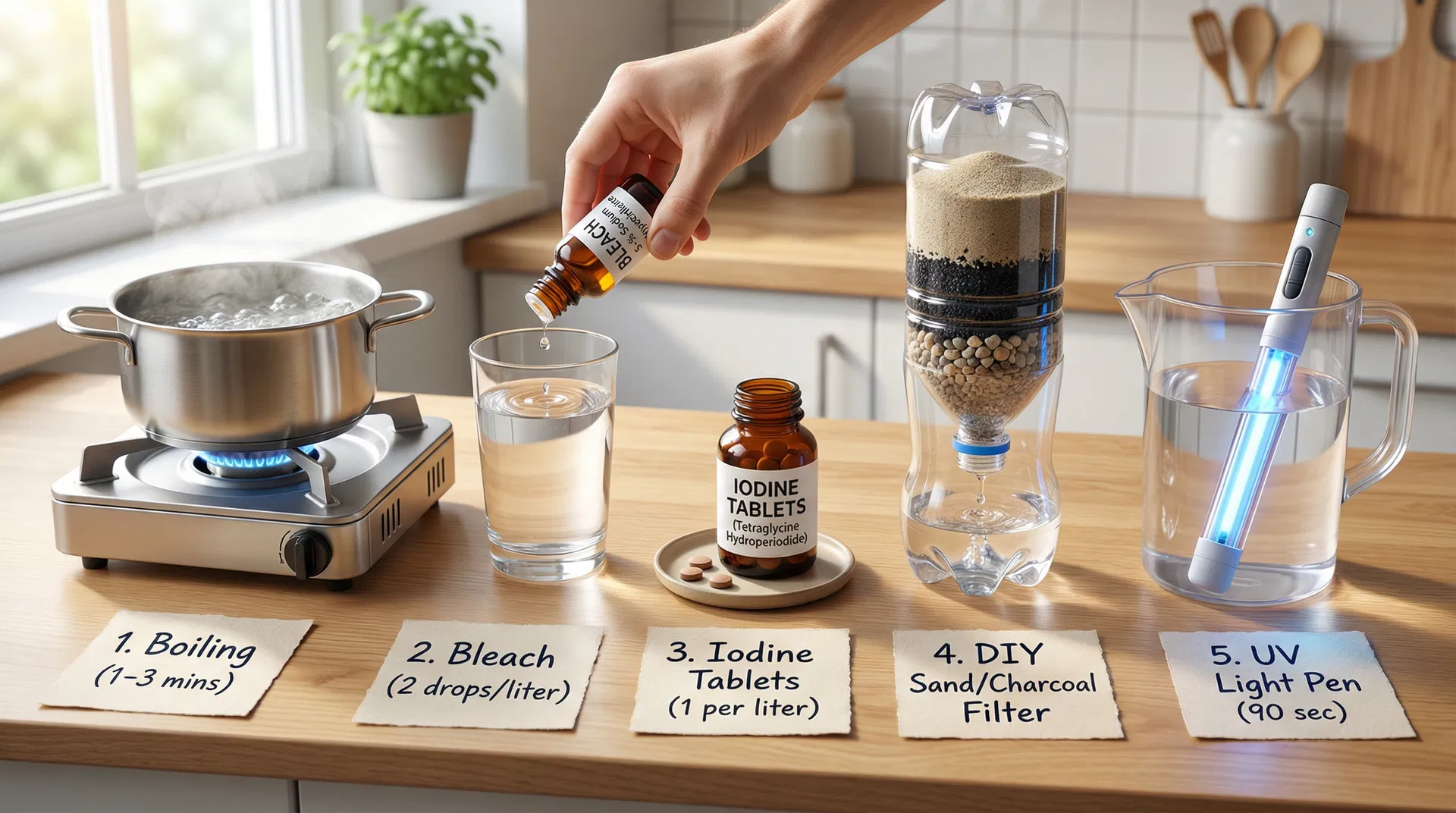
Learn 5 budget-friendly methods to purify water using everyday items under $5. From boiling to DIY filters, master emergency water treatment.
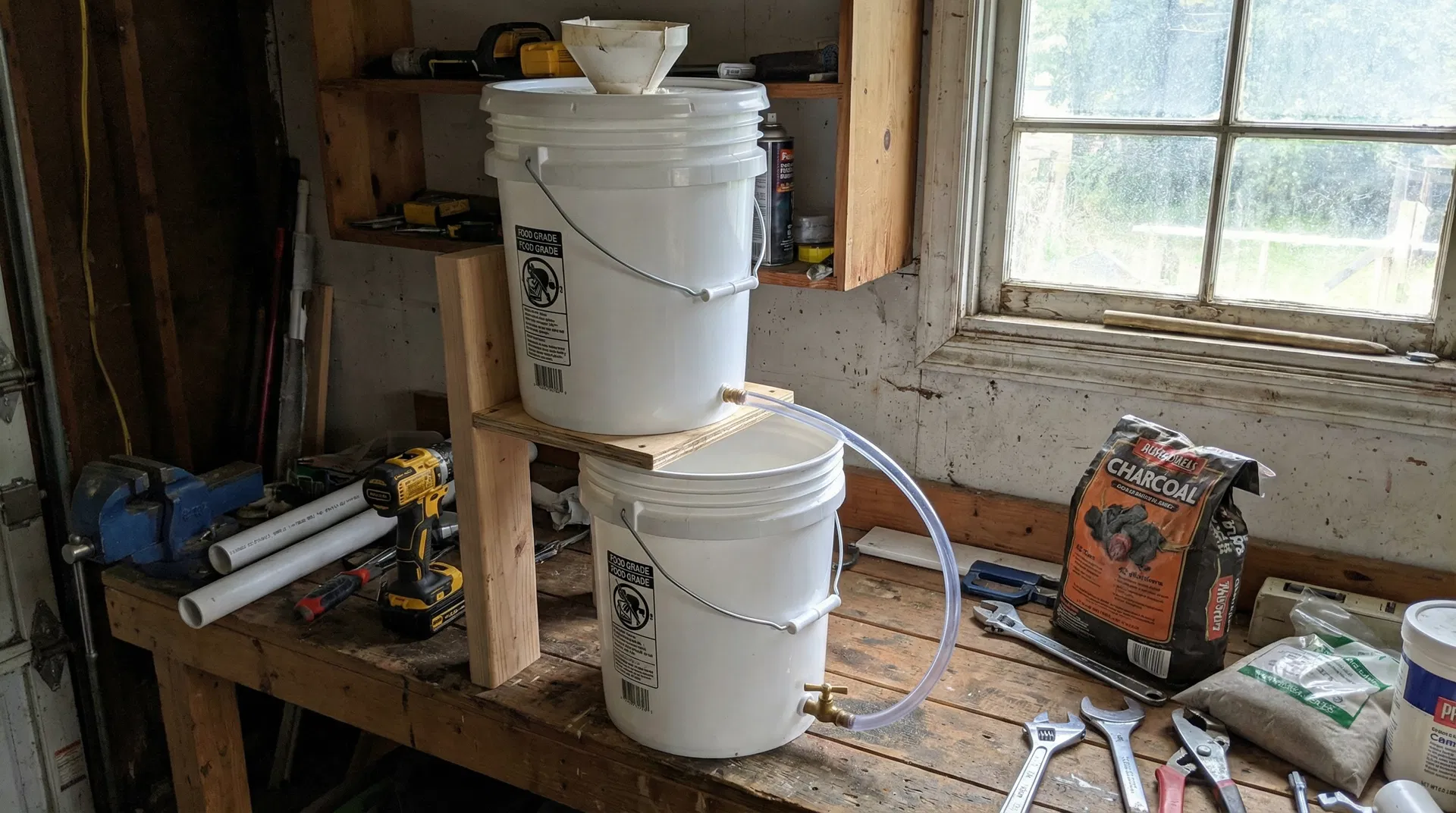
Build a DIY gravity water filter from hardware store parts for $15-25. Filter murky water using two buckets and ceramic filter candles.

Your hot water heater contains 30-50 gallons of emergency drinking water. Here's how to access it safely.