Power Grid Reality: Long-Term Outages Are More Common Than You Think
Texas was 4 minutes from a grid collapse that would have taken weeks to restore. The 2003 blackout left NYC without power for 2 days. When the grid fails, the official "72-hour" advice becomes dangerously inadequate.
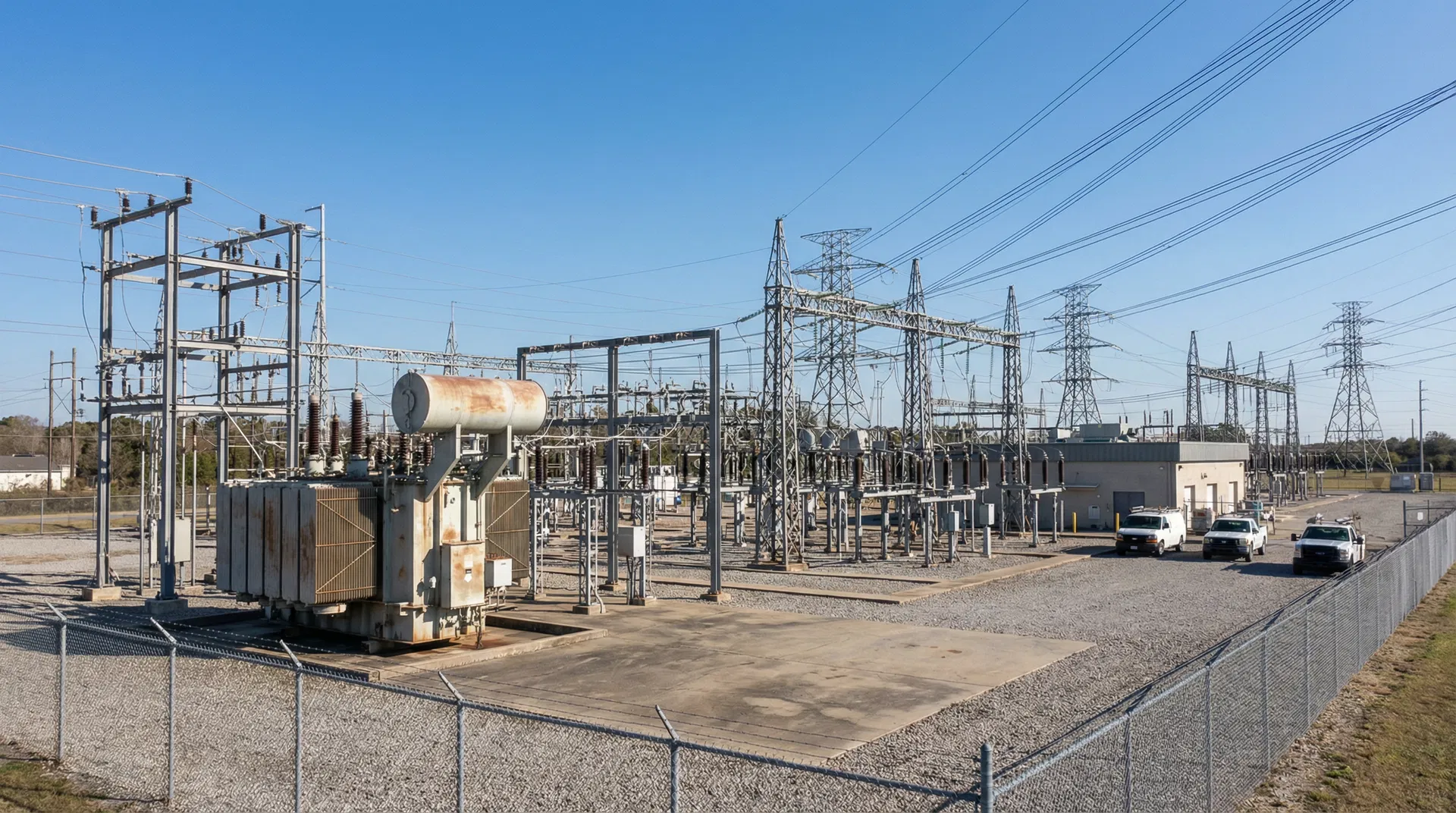
**Texas was 4 minutes from a grid collapse that would have taken WEEKS to restore.** Not hours. Weeks. The 2003 Northeast blackout left 50 million people without power for days. The official "72-hour" emergency advice is dangerously inadequate for grid failures.
The Power Grid Reality: Why "Weeks Without Power" Means Months
Estimated read time: 11 minutes | Difficulty: Intermediate | Total cost: $25-100
This article discusses potential emergency scenarios based on historical events and expert analysis. The goal is to help you prepare realistically, not to cause alarm.
Key Takeaways:
- The Texas power grid in 2021 was 4 minutes 37 seconds from complete collapse that would have taken weeks to restore
- NYC took 2 full days to restore power after the 2003 blackout, despite modern infrastructure
- Major power transformers can take months or years to manufacture and replace
- The "72-hour" guideline is a best-case scenario; real outages last 2-3 weeks or longer
The official advice sounds reassuring. Government agencies tell us to prepare for 72 hours without power. Emergency management websites suggest having supplies for three days. The implication is clear: help will arrive, power will be restored, and life will return to normal within a long weekend.
The reality, as revealed by actual power grid failures, tells a very different story. When the grid goes down on a large scale, restoration doesn't take hours or days, it takes weeks or even months. Understanding why this happens, and what it means for your preparedness planning, could be the difference between weathering a crisis and becoming a casualty of wishful thinking.
How the Power Grid Actually Works (And Why It's Fragile)
The North American power grid is not a single unified system but rather three major interconnected grids: the Eastern Interconnection, the Western Interconnection, and the Texas Interconnection. Within these grids, power flows constantly from generators to consumers through a complex network of transmission lines, substations, and distribution systems.
This interconnection creates both strength and vulnerability. When one part of the grid experiences problems, the load can theoretically be redistributed to other areas. However, this same interconnection means that a failure in one location can cascade rapidly across vast regions, much like a row of dominoes falling.
The grid operates on a principle of constant balance. Power generation must exactly match power consumption at all times. When this balance is disrupted, whether by equipment failure, extreme weather, or human error, the system can spiral out of control in minutes or even seconds.
Protective systems automatically shut down generators and disconnect transmission lines to prevent damage, but these same protective measures can transform a local problem into a regional catastrophe.
The 2003 Northeast Blackout: A Case Study in Cascade Failure
On August 14, 2003, a software bug in the alarm system at FirstEnergy's control room rendered operators unaware that transmission lines were overloaded and sagging. What should have been a manageable local blackout cascaded into the collapse of much of the Northeast regional electricity distribution system. Within 30 minutes, 55 million people across eight U.S. states and Ontario lost power.
The Restoration Timeline
The restoration timeline reveals the gap between official expectations and ground truth:
- 2 hours: Some areas restored (best-case scenario)
- 7 hours: Most areas had power back by midnight
- 48 hours: NYC and Toronto achieved full restoration
This was considered a relatively fast restoration for such a widespread event. The 2003 blackout affected an area where infrastructure was relatively modern, spare parts were available, and skilled workers could be mobilized quickly. Even under these favorable conditions, millions of people went without power for 48 hours or longer.
Cascade Effects
The secondary effects cascaded as quickly as the power failure itself:
- Water systems lost pressure, forcing boil-water advisories
- Cellular networks overloaded and multiple cell sites went dark
- Airports closed completely
- The Amtrak Northeast Corridor shut down
- Telephone networks remained mostly operational but were overwhelmed by call volume
The 2021 Texas Freeze: Four Minutes From Catastrophe
The February 2021 Texas power crisis exposed just how close a modern grid can come to complete, long-term collapse. When three severe winter storms struck Texas between February 10 and 27, 2021, more than 4.5 million homes and businesses lost power.
Shocking Reality: The Texas power grid was 4 minutes and 37 seconds away from complete failure. If the grid had collapsed completely, restoration could have taken weeks or even months.
The death toll reached between 246 and 702 people, depending on how deaths are attributed. Economic damages exceeded $195 billion, likely making it the most expensive disaster in Texas history.
Why Complete Collapse Would Take So Long
The answer lies in what engineers call a "black start" scenario. Most power plants require electricity to start up. In a total grid collapse, there is no electricity available to restart the plants.
Only a handful of facilities have "black start" capability, the ability to restart without external power. These facilities must be brought online first, then used to gradually restart other plants, which then power up more plants, in a slow, methodical process that can take weeks.
The Actual Timeline
The actual restoration timeline in Texas, even with partial grid shutdown preventing complete collapse, stretched far beyond the "72-hour" guideline:
- February 10-27: Crisis period (17 days)
- February 22: Harris County (most populated) returned to normal power (12 days after crisis began)
- February 27: Final boil-water advisories lifted (17 days into crisis)
The Root Cause
The crisis stemmed from failure to winterize power infrastructure, primarily natural gas facilities, but also wind turbines and other generation sources. A decade earlier, federal regulators had warned Texas that its power plants would fail in sufficiently cold conditions. The warnings were ignored, and the cost of that decision was measured in hundreds of lives and nearly $200 billion in damages.
Why Restoration Takes Longer Than Officials Admit
When power grid operators and government officials discuss restoration timelines, they typically present best-case scenarios. There are several reasons why actual restoration takes far longer than these estimates suggest.
Spare Parts Availability
Large power transformers, the backbone of the transmission system, are custom-built for specific locations and can take months or even years to manufacture and deliver. Utilities typically keep few spares on hand due to their enormous cost, a single large transformer can cost millions of dollars.
If multiple transformers fail simultaneously across a region, restoration waits for manufacturing and delivery.
Skilled Workforce Limitations
The power industry has experienced a significant aging of its workforce, with many experienced workers retiring and fewer young people entering the field. During a major outage, utilities can request mutual aid from other regions, but if the outage is widespread, there simply aren't enough qualified workers to go around.
Logistics and Access Challenges
Restoration slows in ways that don't appear in planning documents:
- Severe weather may make roads impassable
- Frozen equipment must be thawed before it can be safely energized
- Urban traffic gridlock prevents repair crews from reaching damaged equipment
Cascade Effects on Other Infrastructure
Without power, a vicious cycle emerges:
- Fuel pumps don't work, so repair vehicles can't refuel
- Communications systems fail, making coordination difficult
- Water treatment and distribution systems fail, creating public health emergencies that divert resources
The 72-Hour Myth
The 72-hour guideline persists because it serves multiple purposes:
- For government agencies: A manageable planning target
- For utilities: A best-case scenario under ideal conditions
- For the public: A comforting, achievable preparation goal
But historical evidence consistently shows that major power outages last far longer than 72 hours, especially in scenarios involving widespread infrastructure damage or extreme weather.
What These Realities Mean for Your Preparation
Understanding the true timeline of power restoration changes how you should prepare. The difference between preparing for three days and preparing for three weeks is not just a matter of scale, it requires fundamentally different strategies.
Food Storage
3 days: Use up what's in the refrigerator, eat canned goods and peanut butter
3 weeks: Systematic food storage plan with rotation schedules and diverse nutrition sources
Water Storage and Purification
Municipal water systems depend on electric pumps. When power fails, water pressure drops and eventually stops completely. Boil-water advisories often remain in effect even after power returns, as the system must be flushed and tested.
3 days: Stored water only
3 weeks: Both storage AND reliable purification methods
Heating and Cooling
3 days: Uncomfortable inconvenience
3 weeks: Life-threatening emergency, especially for vulnerable populations
A winter power outage lasting three weeks can be fatal. Similarly, a summer outage of three weeks without air conditioning creates dangerous heat exposure, particularly in urban heat islands.
Medication and Medical Needs
Refrigerated medications like insulin remain viable for a few days without power if kept cool. After a week, they begin to degrade. After two weeks, they may be completely ineffective.
Medical equipment that requires power, CPAP machines, oxygen concentrators, electric wheelchairs, needs backup power solutions that can last weeks, not days.
Social and Psychological Factors
3 days: An adventure
3 weeks: Tests community cohesion, family relationships, and individual mental health
Preparation must include plans for maintaining morale, resolving conflicts, and managing stress over extended periods.
Your Power Outage Action Plan
Immediate Actions (Do Today)
1. Assess your current preparedness honestly
How many days could you realistically survive without electricity? Count your stored water, check your food supplies, and identify which of your daily activities absolutely require power. This assessment reveals your actual vulnerability, not your imagined preparedness.
2. Identify your most critical power needs
What equipment or systems in your home absolutely must have power?
Priority order:
- Medical equipment
- Heating or cooling systems (depending on climate)
- Refrigeration for food and medication
- Communications equipment
This Week
1. Develop a backup power strategy
For most people, this means a combination of approaches:
- Battery-powered lights and radios
- Small generator for critical loads
- Solar charging system for phones and small devices
The goal is not to maintain normal life but to power critical systems for extended periods.
2. Create or expand your water storage
The standard recommendation is one gallon per person per day, but this assumes drinking and basic hygiene only. For a three-week scenario, consider storing at least 20 gallons per person, plus having reliable [water purification](/articles/5-ways-purify-water-under-5-dollars) methods for additional sources.
Water is heavy and takes up space, but it's non-negotiable for survival.
This Month
1. Test your power outage plans with a realistic drill
Turn off your main breaker and live without grid power for 24 hours. This reveals gaps in your preparation that no amount of planning can uncover:
- Can you actually cook the food you've stored?
- Do your flashlights have working batteries?
- Can you stay warm or cool?
- Does your family know where emergency supplies are located?
2. Build community connections with neighbors
Extended power outages are easier to manage with community cooperation:
- Identify neighbors with complementary skills and resources
- Discuss mutual aid agreements
- Share information about preparation strategies
- Community resilience multiplies individual preparation efforts
The Bottom Line: Plan for Weeks, Not Days
The power grid is more fragile than most people realize, and restoration takes far longer than official estimates suggest. Historical evidence from actual large-scale outages consistently shows that restoration takes weeks, not days, especially when infrastructure is damaged or extreme weather is involved.
This doesn't mean you should panic or assume the worst. It means you should prepare realistically. The 72-hour guideline is not wrong, it's just incomplete. Use it as your minimum baseline, but plan for the reality that major power outages typically last 2-3 weeks, and complete grid collapse could take months to restore.
The good news is that preparation for extended power outages overlaps significantly with preparation for other emergencies. Water storage, food supplies, alternative heating and cooking methods, and backup power solutions serve you well in multiple scenarios. The investment in realistic preparation pays dividends across many potential crises.
The power grid will fail again. The only questions are when, where, and for how long. Your preparation today determines whether you weather that failure safely or become another statistic in the next after-action report.
What's Next?
This is the first article in our Reality Check series, which examines underreported realities about preparedness and infrastructure vulnerabilities. Next, we'll explore supply chain fragility and why grocery stores can't sustain you during extended emergencies.
Related Articles:
- [Emergency Power](/articles/diy-rocket-stove-tin-cans): Generators vs. Battery Systems for Under $200
- Water Storage: Free and Nearly-Free Container Solutions
- Winter Heating Without Electricity: Tested Methods That Work
Sources & Further Reading
[1] Northeast blackout of 2003 - Wikipedia. https://en.wikipedia.org/wiki/Northeast_blackout_of_2003
[2] 2021 Texas power crisis - Wikipedia. https://en.wikipedia.org/wiki/2021_Texas_power_crisis
[3] The Vulnerability of the Power Grid Structure - PMC. https://pmc.ncbi.nlm.nih.gov/articles/PMC8587080/
[4] Cascading Consequences: Electrical Grid Critical Infrastructure Vulnerability - Domestic Preparedness. https://www.domesticpreparedness.com/articles/cascading-consequences-electrical-grid-critical-infrastructure-vulnerability/
Sources and References
- FEMA: What to Bring During Evacuation - Official emergency preparedness guidelines
- Ready.gov: Power Outage Safety - Federal guidance on preparing for extended power outages
Sources and References
- FEMA: What to Bring During Evacuation - Official emergency preparedness guidelines
- Ready.gov: Power Outage Safety - Federal guidance on preparing for extended power outages
Test User
Feb 2, 2026, 04:51 PM
This is a test comment to verify the comments system is working correctly. Great article on power grid vulnerabilities!
Related Articles

FEMA's own goal is 2-4 days response time, not 72 hours. Hurricane Katrina took days. Hurricane Maria left 3.7 million without power for nearly a year. Understanding real government response timelines is critical for adequate preparation.

No electricity means no water—municipal systems depend on electric pumps. Flint, Jackson MS, and the Texas freeze affected millions. 2.1 trillion gallons lost annually to aging pipe breaks. Water storage is non-negotiable.

Grocery stores carry 3 days of inventory. During COVID-19, panic buying reduced that to less than 1 day. If trucks stopped running, stores would be empty within 4-5 days. Understanding just-in-time inventory is essential for realistic food storage planning.