Building a $20 First Aid Kit That Actually Saves Lives
Most household first aid kits are useless in real emergencies. Here's how to build a genuinely life-saving first aid kit for $20 that prioritizes what actually matters: stopping bleeding, preventing infection, and stabilizing injuries.
Building a $20 First Aid Kit That Actually Saves Lives
Your kid just sliced their hand open on a broken glass, and you're digging through a drawer of expired band-aids and mystery ointments. Most household "first aid kits" are useless in real emergencies. Pre-made kits cost $40 to $100 and contain items you'll never use. Here's how to build a genuinely life-saving first aid kit for $20 that prioritizes what actually matters: stopping bleeding, preventing infection, and stabilizing injuries until help arrives.
The Problem with Store-Bought First Aid Kits
Walk into any pharmacy and you'll find colorful first aid kits ranging from $30 to $150. Open one up and you'll find:
- 50+ tiny bandages you could buy for $2
- Single-use antibiotic ointment packets that dry out
- A cheap plastic "splint" that won't support anything
- Tweezers that couldn't remove a splinter
- An "emergency blanket" the size of a napkin
These kits are designed to check boxes on a list, not save lives. The American Red Cross recommends specific supplies based on decades of emergency response data, but commercial kits prioritize profit margins over effectiveness. [1]
The Three Real Priorities in Emergency First Aid
When someone is seriously injured, only three things matter in the first critical minutes:
- Stop severe bleeding (you have 3 to 5 minutes before blood loss becomes life-threatening)
- Prevent infection (contaminated wounds can turn deadly within 24 to 48 hours)
- Stabilize injuries (prevent further damage until professional help arrives)
Everything else is secondary. Your $20 budget should focus entirely on these three priorities.
The $20 First Aid Kit: Complete Shopping List
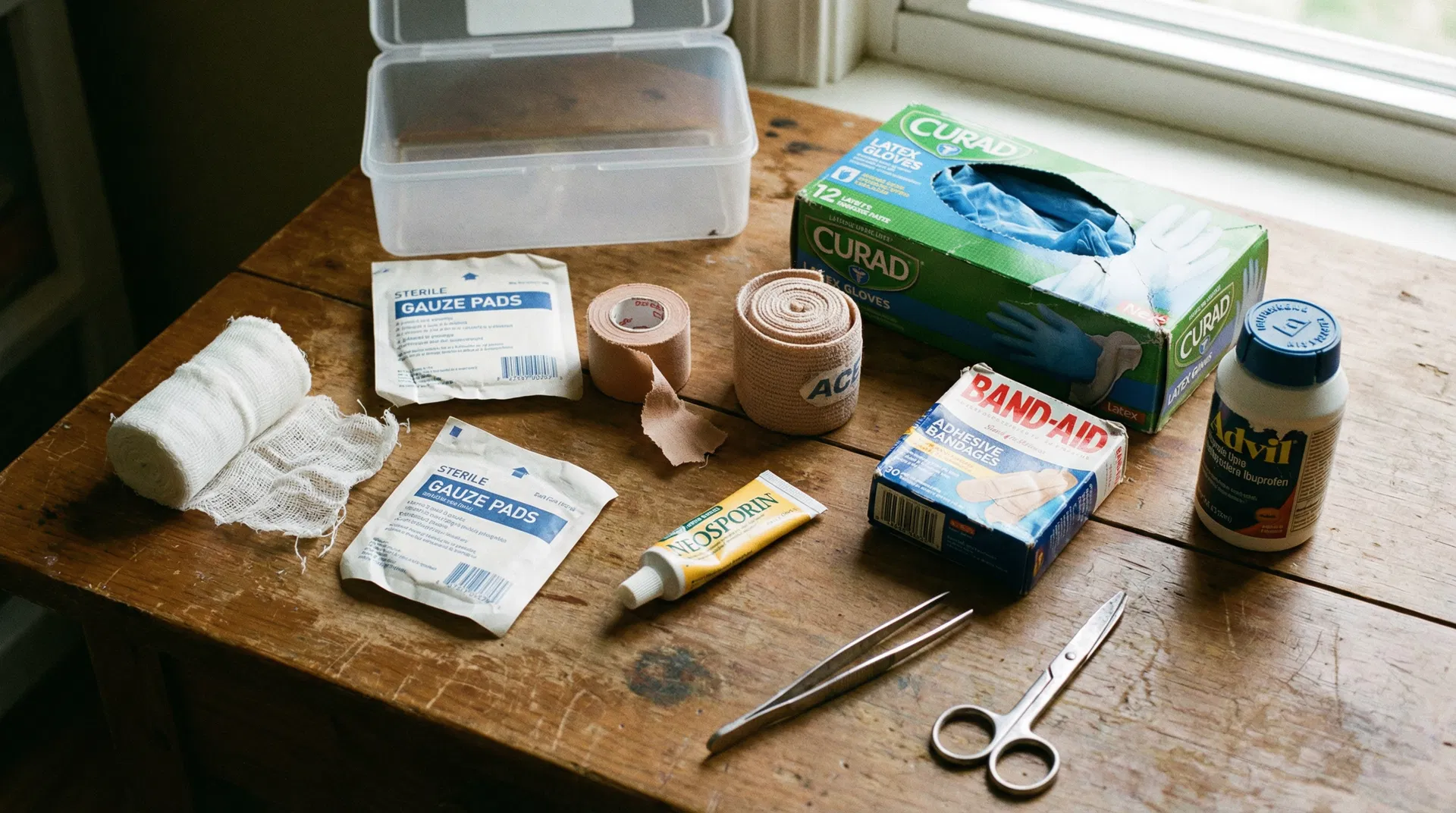
Here's exactly what to buy, where to buy it, and why each item matters. Total cost: approximately $19 to $27 depending on your local stores.
| Item | Where to Buy | Approximate Cost | Why It Matters |
|---|---|---|---|
| Rolled gauze (2 rolls, 4" wide) | Dollar store or pharmacy | $3 to $4 | Stops serious bleeding; can wrap large wounds |
| Sterile gauze pads (box of 10, 4x4") | Dollar store or pharmacy | $2 to $3 | Covers wounds; absorbs blood |
| Medical tape (1 roll, 1" wide) | Dollar store or pharmacy | $2 | Secures bandages; won't fall off |
| Elastic bandage wrap (ACE bandage) | Dollar store or pharmacy | $3 to $4 | Compression for sprains; secures splints |
| Antibiotic ointment (generic, 1 oz tube) | Dollar store or pharmacy | $2 to $3 | Prevents infection in cuts and scrapes |
| Disposable gloves (box of 10 pairs) | Dollar store or pharmacy | $2 | Protects you and the injured person from infection |
| Adhesive bandages (box of 40+) | Dollar store | $1 to $2 | Covers minor cuts and blisters |
| Tweezers (metal, pointed tip) | Dollar store | $1 | Removes splinters, debris, ticks |
| Small scissors (sharp) | Dollar store | $1 | Cuts tape, gauze, clothing to access wounds |
| Ibuprofen (generic, 50-count bottle) | Dollar store or pharmacy | $2 to $3 | Reduces pain and inflammation |
Total: $19 to $27
What to Skip (and Why)
These items appear in expensive kits but provide minimal value:
- Alcohol wipes: Sting like hell, damage tissue, and don't clean wounds better than soap and water [2]
- Hydrogen peroxide: Kills healthy tissue along with bacteria; slows healing [2]
- Instant cold packs: Cost $3 to $5 each, single-use; a bag of frozen peas works better
- Thermometer: Useful but not critical in the first minutes of an emergency
- CPR mask: Important for trained responders, but most people need CPR training first
How to Use Your Kit: The Critical Skills
Having supplies means nothing if you don't know how to use them. Here are the essential techniques:
Stopping Severe Bleeding
- Put on gloves (protects both of you from bloodborne pathogens)
- Apply direct pressure with sterile gauze pads directly on the wound
- Maintain pressure for 10 minutes without lifting to check (lifting restarts bleeding)
- If blood soaks through, add more gauze on top (don't remove the first layer)
- Wrap with rolled gauze to maintain pressure while you get help
- Elevate the injury above heart level if possible
When to call 911 immediately: Bleeding that doesn't stop after 10 minutes of direct pressure, spurting blood (arterial bleeding), or wounds longer than 1 inch that gape open. [3]
Cleaning and Dressing Wounds
- Rinse with clean water (tap water is fine; bottled if available) [2]
- Remove visible debris with tweezers (sterilize with rubbing alcohol first)
- Apply antibiotic ointment in a thin layer
- Cover with sterile gauze secured with medical tape
- Change dressing daily and watch for signs of infection
Signs of infection (seek medical care): Increasing redness spreading from wound, warmth, swelling, pus, red streaks, fever. [4]
Treating Sprains and Strains
Remember RICE: Rest, Ice, Compression, Elevation
- Rest the injured area (don't use it)
- Ice for 20 minutes every 2 to 3 hours (use frozen vegetables if no ice)
- Compression with elastic bandage (snug but not cutting off circulation)
- Elevation above heart level to reduce swelling
Wrap the elastic bandage starting below the injury and moving upward, overlapping each layer by half. If fingers or toes turn blue, tingle, or go numb, the wrap is too tight. [5]
Where to Store Your Kit
Keep it accessible, not hidden. The best first aid kit in the world is useless if you can't find it during an emergency.
- Kitchen or bathroom (most home injuries happen here)
- Clear plastic container (you can see contents at a glance)
- Label clearly with permanent marker: "FIRST AID KIT"
- Tell everyone in your household where it is
Maintaining Your Kit
- Check every 6 months (set a phone reminder)
- Replace used items immediately after an emergency
- Check expiration dates on ointment and medications
- Restock before items run out (don't wait until you need them)
Building a Car Kit
Keep a duplicate kit in your vehicle. Car accidents, outdoor activities, and roadside emergencies often happen far from home. Use the same shopping list, but add:
- Emergency blanket ($2 at dollar store; the real mylar kind)
- Flashlight and batteries ($3)
- Bottled water (for wound cleaning)
Total car kit cost: approximately $25 to $30.
When Professional Help Isn't Coming
In true emergencies (natural disasters, remote locations, prolonged power outages), you may need to manage injuries for hours or days before reaching medical care. In these situations:
- Double your gauze supply (bleeding control is your top priority)
- Add oral rehydration salts (prevents shock from blood loss or dehydration)
- Include a SAM splint ($10; reusable, moldable splint for fractures)
- Add a tourniquet ($25 to $30 for a real CAT tourniquet, not improvised)
These additions bring your kit to $50 to $60, but they bridge the gap between basic first aid and survival medicine.
If you've completed advanced first aid or wilderness medicine training, consider adding: nasopharyngeal airway (properly sized), CPR pocket mask with one-way valve, and hemostatic gauze like QuikClot for severe bleeding. These items require proper training to use safely and effectively, but they can be life-saving in situations where professional help is hours or days away.
The Bottom Line
You don't need an expensive, pre-packaged first aid kit filled with items you'll never use. For $20, you can build a focused, effective kit that addresses the three critical priorities: stopping bleeding, preventing infection, and stabilizing injuries.
The difference between a useless kit and a life-saving one isn't the price tag. It's understanding what actually matters in the first minutes of an emergency and having the right supplies to act on that knowledge.
Buy the supplies. Learn the skills. Store it where you can find it. That's how you turn $20 into something that could save a life.
Sources and References
[1] American Red Cross. "Anatomy of a First Aid Kit." Accessed February 2026. https://www.redcross.org/get-help/how-to-prepare-for-emergencies/anatomy-of-a-first-aid-kit.html
[2] Johns Hopkins Medicine. "Wound Care: First Aid." Accessed February 2026. https://www.hopkinsmedicine.org/health/treatment-tests-and-therapies/wound-care-first-aid
[3] Mayo Clinic. "Severe Bleeding: First Aid." Accessed February 2026. https://www.mayoclinic.org/first-aid/first-aid-severe-bleeding/basics/art-20056661
[4] Centers for Disease Control and Prevention (CDC). "Wound Care and Infection Prevention." Accessed February 2026. https://www.cdc.gov/disasters/woundcare.html
[5] Cleveland Clinic. "How to Wrap a Sprained Ankle." Accessed February 2026. https://health.clevelandclinic.org/how-to-wrap-a-sprained-ankle
No comments yet. Be the first to share your thoughts!
Related Articles

Identify and use 10 common medicinal plants for minor injuries and ailments. Complete with identification photos and practical uses.
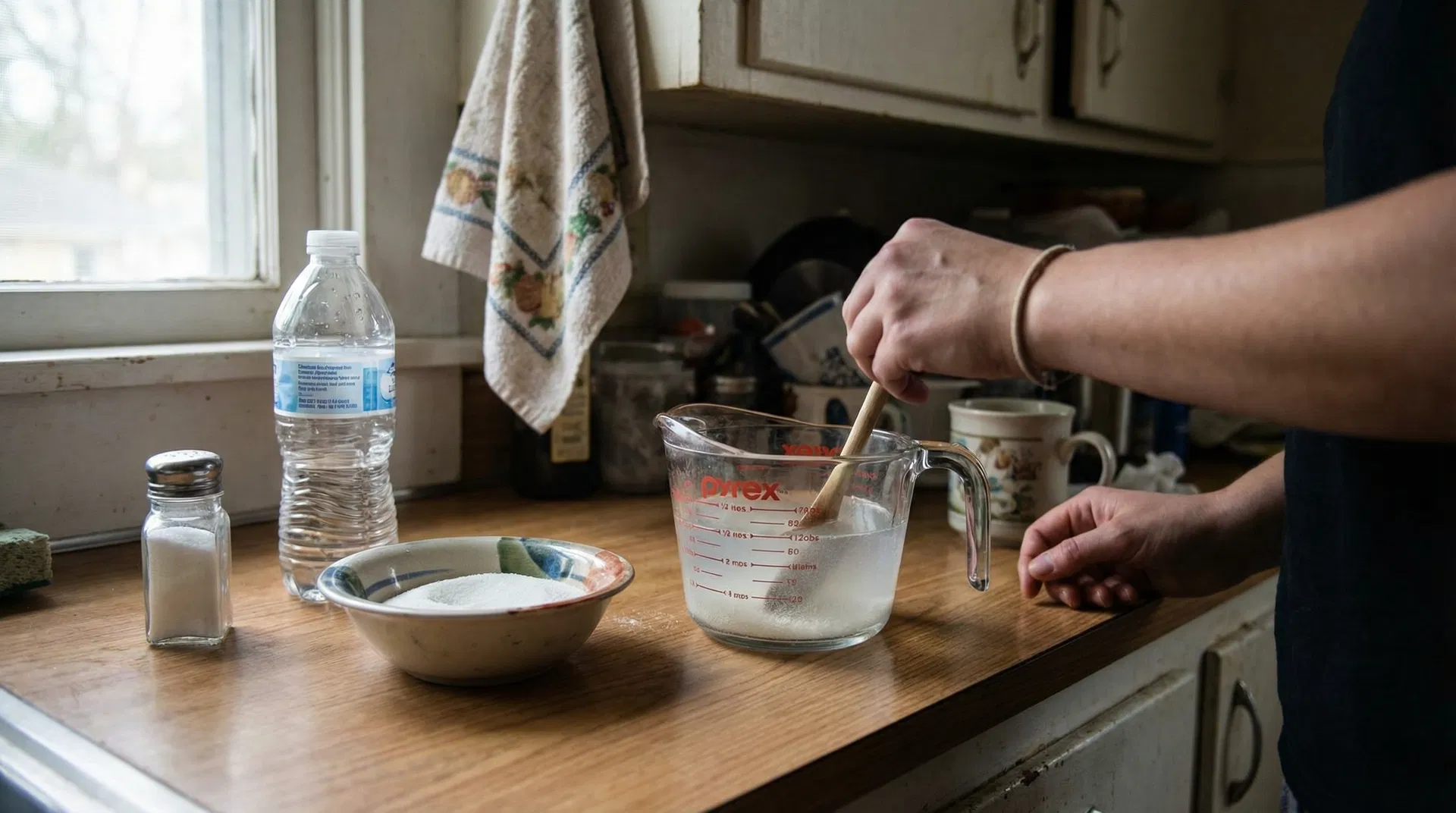
Contaminated water causes more deaths worldwide than war. When medical care isn't available, knowing how to recognize and treat waterborne illness can mean the difference between recovery and a life-threatening crisis.
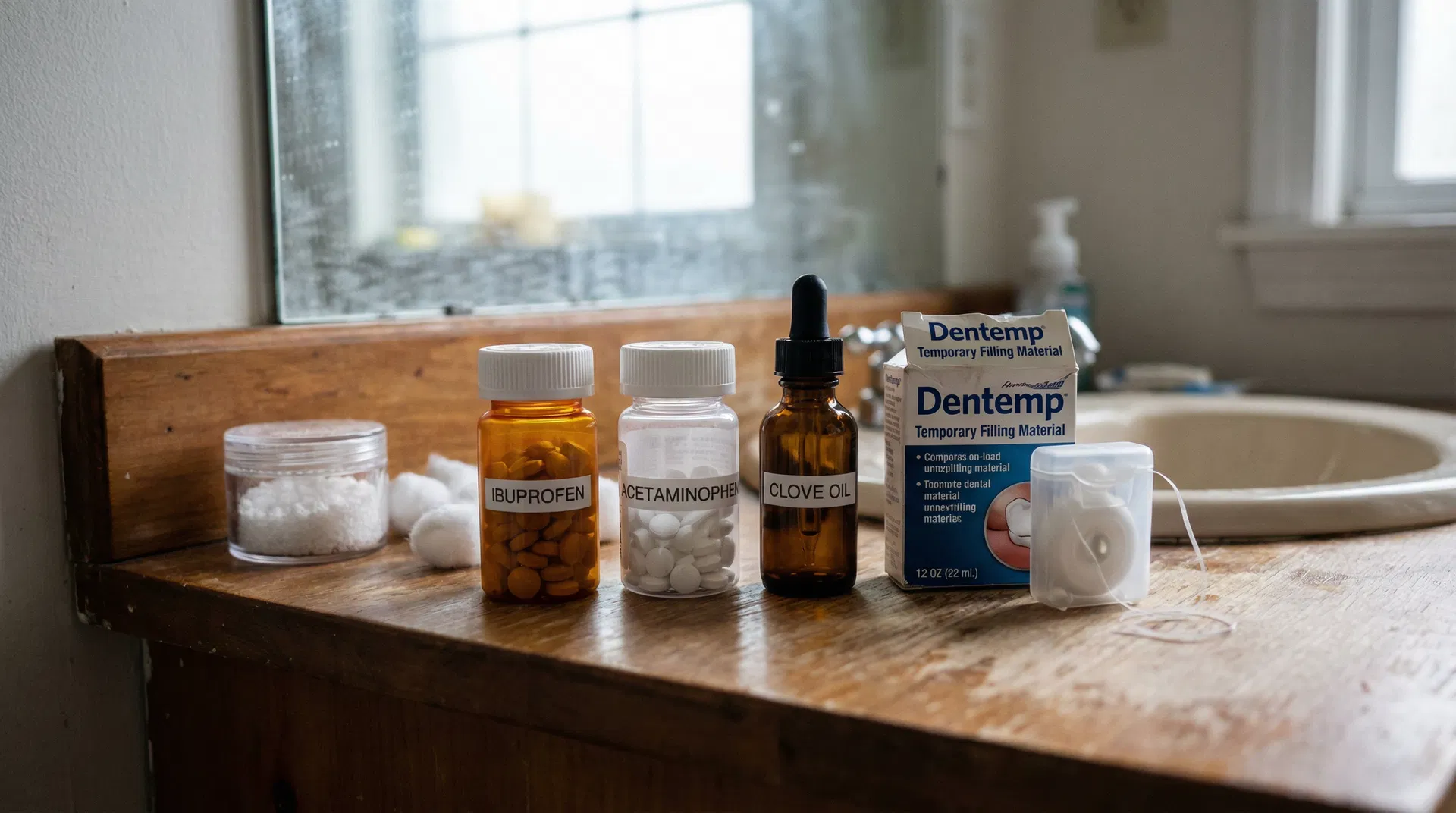
Dental pain is one of the most excruciating experiences the human body can produce. Here's how to manage tooth emergencies when professional help isn't available, and how to tell when you're facing a true life-threatening situation.